Psi-Pi: Voice-Controlled Chatbot Powered by ChatGPT
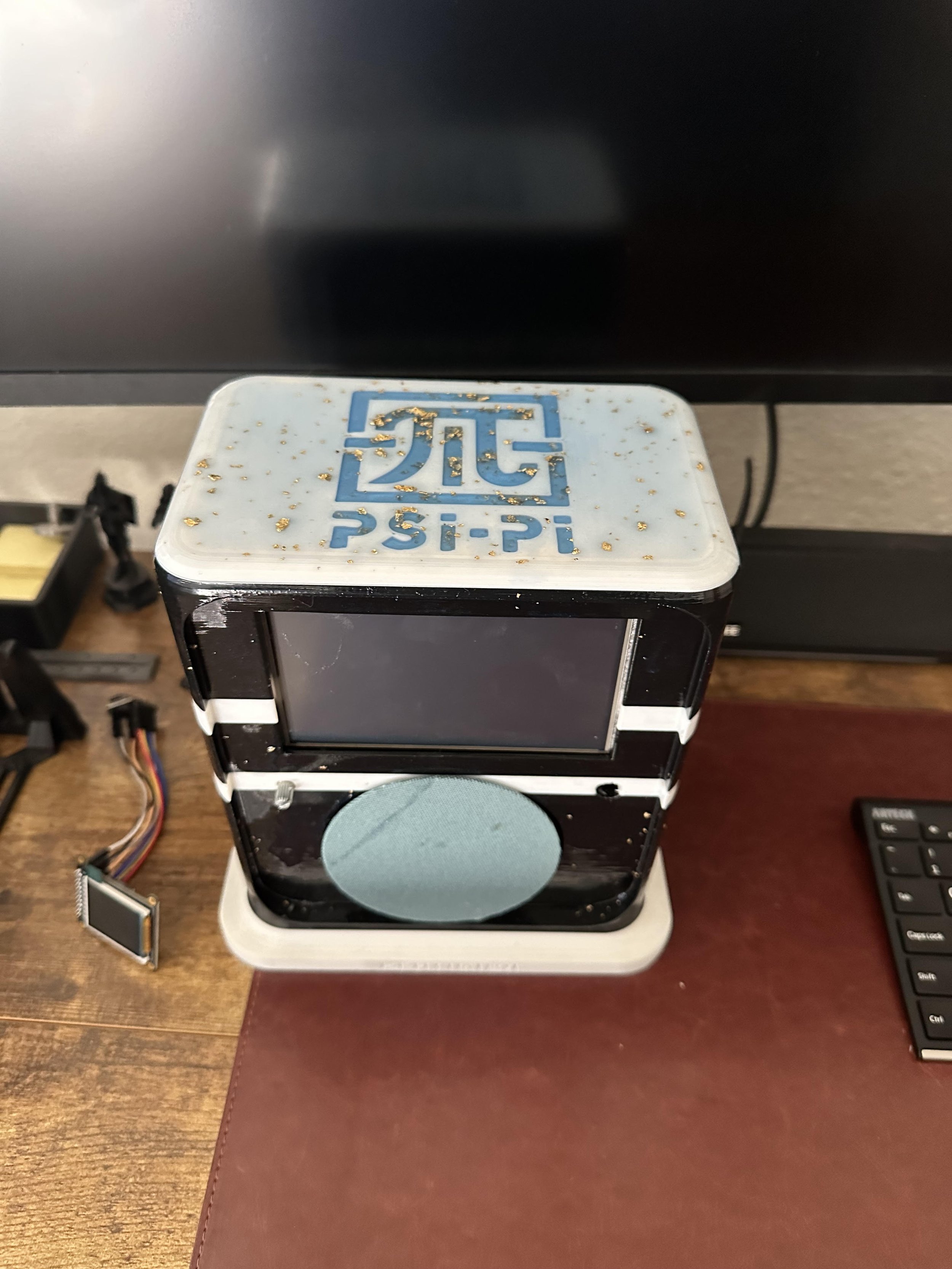
Psi-Pi is a voice assistant I built around a Raspberry Pi and housed in a custom 3D-printed enclosure. It listens through a USB microphone, sends spoken questions to OpenAI’s GPT model, and replies through a MAX98357 amplifier and an Echo Pop speaker.
The system is powered by a 3S LiPo battery through a buck converter and includes dual 5V fans for cooling, along with a potentiometer for manual volume control. My goal with the project was to combine hardware, software, and AI into a single portable system that could take spoken input and return natural spoken responses in real time.
Once powered on, Psi-Pi is able to listen for questions and respond out loud using ChatGPT. It was one of those projects that felt especially satisfying because it brought together enclosure design, electronics, audio, and software into something that felt surprisingly complete.
Connection Table
| Component | Pin/Wire | Connection |
|---|---|---|
| MAX98357 Amp | VIN | Breadboard +5V |
| MAX98357 Amp | GND | Breadboard GND |
| MAX98357 Amp | DIN | Raspberry Pi GPIO 16 |
| MAX98357 Amp | BCLK | Raspberry Pi GPIO 20 |
| MAX98357 Amp | LRC | Raspberry Pi GPIO 21 |
| MAX98357 Amp | GAIN | Potentiometer Middle Pin |
| Potentiometer | VCC | Breadboard +5V |
| Potentiometer | GND | Breadboard GND |
| Speaker | + | AMP Speaker Output + |
| Speaker | − | AMP Speaker Output − |
| USB Microphone | USB | Raspberry Pi USB Port |
| Fans | + / − | Breadboard 5V / GND |
| Screen | GPIO Pins | First 26 Pins(direct mount) |
| Buck Converter | VOUT + / − | Breadboard +5V / GND |
| Buck Converter | VIN + / − | LiPo Battery + / − |
Wiring Diagram
